Insights from Data Analytics in Real-Time Mobile Poker Tournament Adjustments in Southeast Asia
Freya Meier · Oct 25, 2026
Insights from Data Analytics in Real-Time Mobile Poker Tournament Adjustments in Southeast Asia
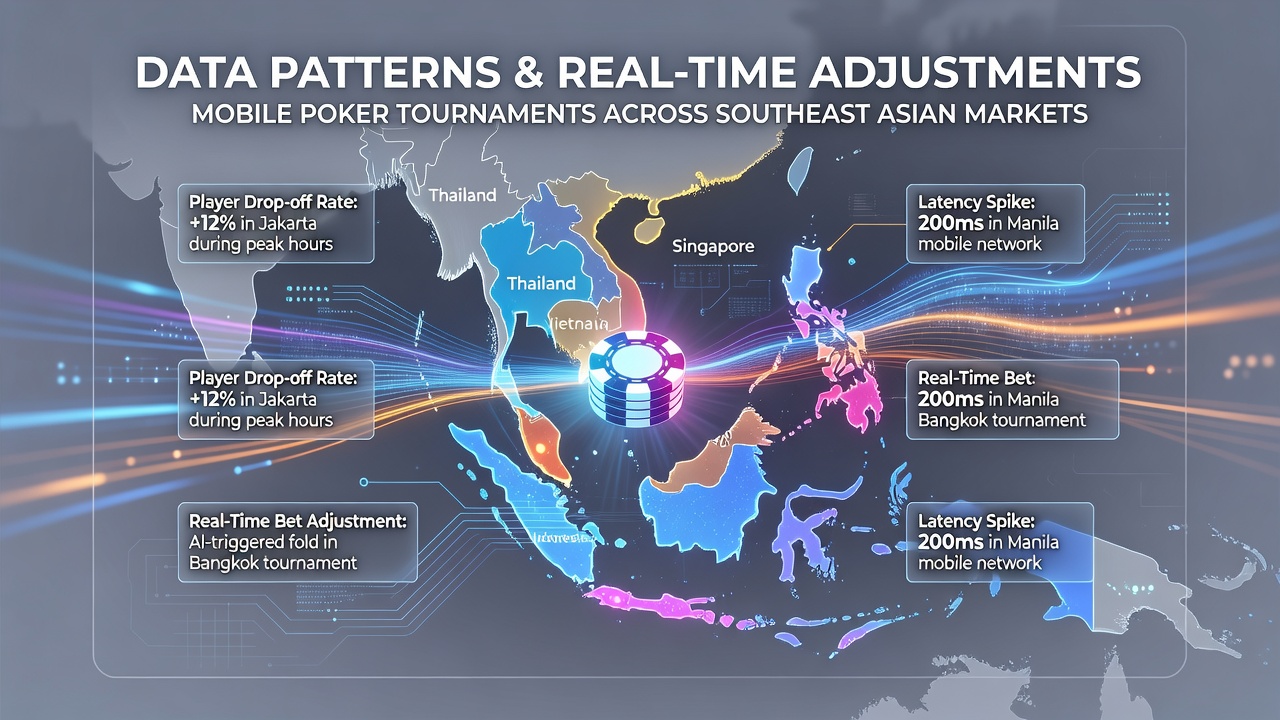
Patterns in player activity and device metrics reveal consistent trends that operators use to refine matchmaking and payout structures during mobile poker events across Southeast Asia, and data collected from sessions in markets like Thailand, Indonesia, and the Philippines shows clusters of peak engagement occurring between 7 PM and 11 PM local time with corresponding spikes in bet frequency.
These clusters correlate with regional network conditions where latency below 50 milliseconds allows for smoother adjustments to blind levels and table assignments, whereas higher delays prompt systems to shift participants toward lower-stakes tables automatically.
Regional Data Variations and Adjustment Mechanisms
Operators track metrics such as session duration, device type, and connection stability to trigger modifications, and figures from October 2026 indicate that Android users in Vietnam averaged 18 percent longer sessions than iOS counterparts during evening tournaments, prompting platforms to prioritize Android-optimized interfaces in real time.
Research from the National University of Singapore highlights how location-based data feeds into algorithms that adjust tournament speed to account for varying regulatory requirements across borders, while players in Malaysia encounter stricter verification pauses that extend average round times by 12 seconds compared to Singapore-based sessions.
Player Behavior and Algorithmic Responses
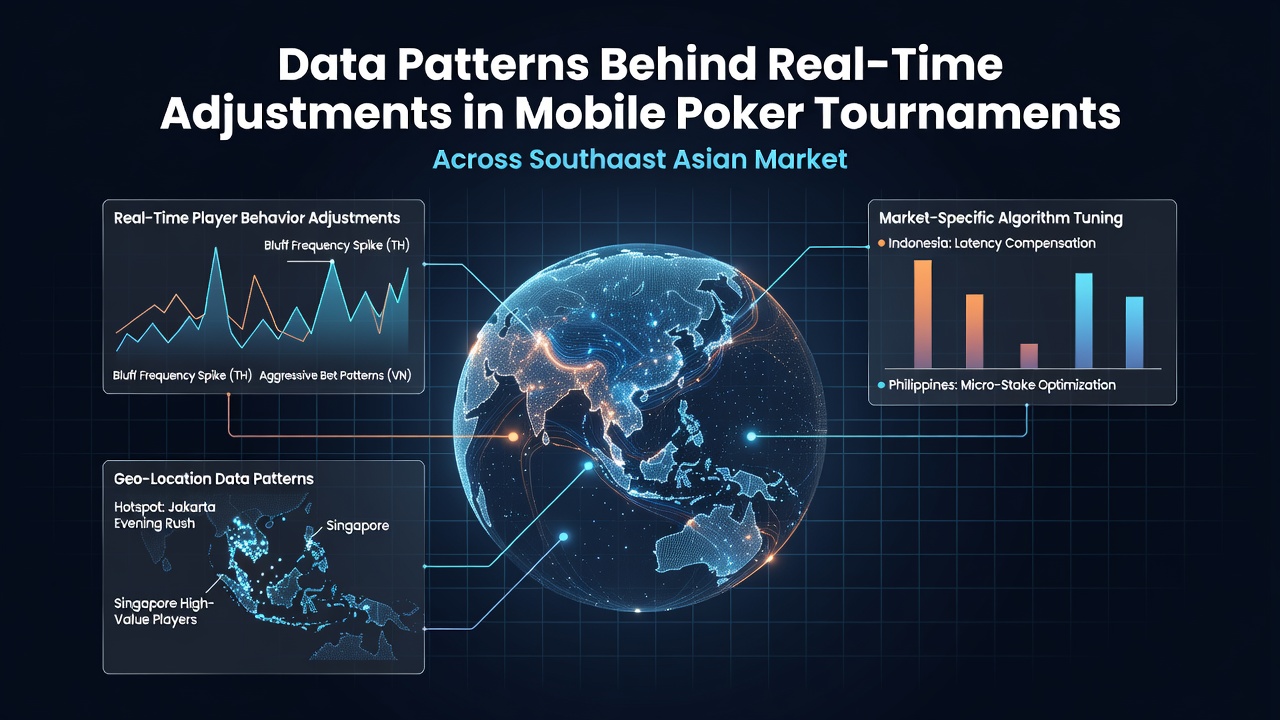
Behavioral datasets demonstrate that participants often increase fold rates by 9 percent when facing opponents from different time zones, and systems respond by grouping similar profiles together to maintain engagement levels without manual intervention.
One study revealed that incorporating weather-related connectivity drops in coastal Indonesian areas leads to predictive scaling of table sizes, and this approach reduces dropouts during sudden signal fluctuations that occur frequently in monsoon seasons.
Network and Regulatory Influences on Tournament Flow
Network analytics from regional carriers feed directly into adjustment protocols, and evidence from industry reports shows that tournaments in the Philippines maintain higher hand volumes per minute when operators preemptively reroute traffic through secondary servers during peak hours.
According to findings published by the Australian Gambling Research Centre, cross-border data patterns also influence prize pool allocations, with Southeast Asian events showing a 7 percent uplift in average winnings when adjustments account for currency fluctuation rates in real time.
Those who analyze these streams note that regulatory updates in Vietnam during late 2026 introduced new data logging requirements that extended setup phases yet improved overall match fairness metrics by reducing mismatched skill pairings.
Emerging Trends in October 2026 Data
October 2026 records indicate a rise in hybrid device usage where participants switch between mobile and tablet mid-tournament, and platforms respond with seamless handoff protocols that preserve betting history and position data without interruption.
Patterns further suggest that incorporating social graph information from regional apps helps predict collusion risks, leading to automatic table reshuffles that maintain competitive balance while complying with local privacy standards.
Conclusion
Collective datasets continue to shape how real-time modifications unfold in Southeast Asian mobile poker tournaments, and the integration of latency, behavioral, and regulatory signals produces more stable session outcomes across diverse markets. Observers note that ongoing refinements based on these patterns support consistent participation rates even as network infrastructures evolve in the region.