UK Gambling Search Demand Continues Decline as Brand Competition Expands in Late 2026
Freya Keller · Oct 11, 2026

UK Gambling Search Demand Continues Decline as Brand Competition Expands in Late 2026
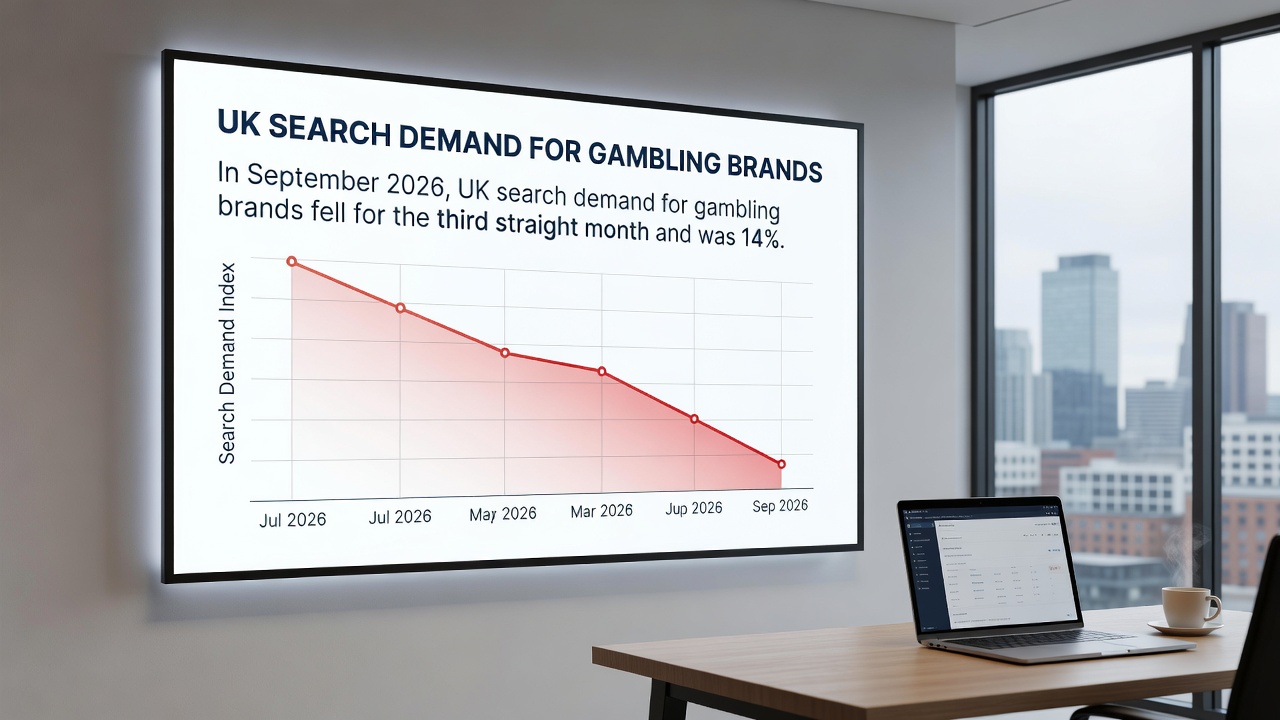
Data from September 2026 shows UK search demand for gambling brands dropped for a third consecutive month, reaching levels 14% lower than the same period the previous year, according to Blask Index metrics. The figures coincide with the Remote Gaming Duty adjustment implemented in April 2026, and analysts tracking the sector note the pattern extends into early October observations as well.
Market-Wide Search Patterns Emerge
The total number of brands drawing measurable search interest grew from 356 to 400 over the twelve-month span ending September 2026, indicating broader visibility across smaller operators even as aggregate demand contracted. This expansion occurred while overall query volumes fell, which suggests users encountered more options yet engaged less frequently with gambling-related searches overall. Those monitoring the Blask Index data point out that the increase in participating brands reflects ongoing diversification rather than heightened consumer activity.
Leading Operators Experience Share Reduction
Bet365, William Hill, and Ladbrokes together accounted for 26.6% of search demand in September 2026, down from 32.3% one year earlier. The combined decline represents a measurable redistribution of attention away from the largest three entities, and observers tracking competitive positioning note this shift unfolded steadily through the summer months. Meanwhile the broader field of 400 brands absorbed the remaining search activity, with mid-tier and emerging operators capturing incremental portions of the total.
Offshore Brand Visibility Increases Following Duty Change
Offshore gambling brands captured 4.2% of UK search demand by September 2026, up from 2.7% the prior year. This movement aligns with the April 2026 rise in Remote Gaming Duty to 40%, and data indicates some portion of projected revenue has begun migrating outside the licensed market. Researchers examining the Blask Index figures have connected the timing of these changes to sustained interest in non-UK regulated platforms, though licensed operators continue to dominate the majority of queries.
Monthly tracking through October 2026 has shown the offshore share holding steady near the 4.2% mark, suggesting the pattern established after the duty adjustment has not reversed in the short term. The expansion in brand count from 356 to 400 includes several offshore entities that previously registered minimal search presence, and this development coincides with the overall drop in total demand volumes.
Competitive Landscape Broadens
With more brands now appearing in search results, the concentration of interest among top operators has eased. The reduction in combined share for the leading three reflects both the duty-related pressures and the wider availability of alternatives that users encounter during routine queries. Experts reviewing the twelve-month comparison note that this redistribution happened gradually rather than through abrupt spikes, allowing smaller operators to register consistent if modest gains in visibility.
Projected revenue flows outside the licensed sector have drawn attention from industry monitors, particularly as the Blask Index continues to record elevated offshore interest. The data set tracks both search demand and Competitive Earning Baseline metrics, providing a dual lens on how user attention translates into potential market movement. Observers note that the third straight month of declining overall demand through September points to a market adjusting to the new duty environment rather than expanding rapidly.
October 2026 Developments Maintain the Trend
Early October readings have shown demand levels remaining below the prior-year baseline, extending the sequence observed since the duty increase took effect. The number of brands sustaining search interest has stayed near the 400 mark, indicating the expanded competitive field has stabilized even as aggregate volumes stayed suppressed. This environment creates conditions where individual operators must compete for smaller slices of a reduced total search pool.
Data Context and Measurement Approach
Blask Index compiles search demand across gambling-related terms and attributes portions to specific brands, allowing month-over-month and year-over-year comparisons. The September 2026 release highlighted both the 14% decline and the offshore share increase to 4.2%, while also documenting the top-three share contraction. Those reviewing the figures emphasize that the metrics capture expressed interest rather than completed transactions, yet the patterns align closely with the timing of regulatory adjustments.
Conclusion
The September 2026 data release from Blask Index documents a market where total search demand fell for the third straight month, the number of active brands rose to 400, and the leading operators saw their combined share drop to 26.6%. Offshore visibility reached 4.2% amid the Remote Gaming Duty increase implemented earlier in the year, with early October figures showing the same directional trends persisting. These measurements together illustrate how regulatory changes and competitive expansion have reshaped search behavior within the UK gambling sector over the preceding twelve months.